
Keep Your Pet Moving: How Minerals Support Joint Health
BEAM Minerals9/10/2026 5 min read

Why Does Joint Pain Happen in Pets?
- Stiff or limping movement
- Reluctance to move
- Slower running or walking
- Decreased appetite
- Lethargy
- Sudden irritability, biting, or scratching, especially when joints are touched
- Trouble moving up or down stairs
- Difficulty jumping (e.g. onto the couch)
- Frequently licking specific joints
Joint Problems in Dogs: Breed Matters
Certain dog breeds are genetically predisposed to joint problems. Purebreds often inherit genetic defects from their parents. Mutts, meanwhile, are less likely to have health problems, as their parents’ gene pool is usually more diverse.
Size also plays a role in joint issues. Broadly speaking, larger breeds have a higher risk of joint problems as they age. Overweight dogs also put excess stress on their joints, which can cause joint pain later in life.
If your dog is one of the breeds listed below, consider adding minerals to their food when they’re young. If your dog is already older, don’t worry—the best time to start is now! Minerals can help at any age, and are especially important for breeds with known joint problems.
Dog breeds prone to joint issues : [ * ][ * ]
- Golden Retriever
- Labrador Retriever
- Rottweiler
- German Shepherd
- Border Collie
- English Springer
- Springer Spaniel
- Boxer
Joint Problems in Cats: Age, not Breed Matters
Unlike dogs, cats are not genetically predisposed to arthritis by breed. [ * ]
In cats, the biggest predictor of joint problems is age. Because cats live so long, almost all of them develop joint issues at some point in their lives.
According to a 2012 study, 82% of cats over age 14 have arthritis in at least one joint . [ * ] Problems can also start earlier: 61% of cats have joint pain by age 12.
Size also plays a role—so while genetics don’t matter in cats, larger breeds like Maine Coons may experience extra stress on their joints. And like with dogs, if your cat is overweight, it’s especially prone to joint problems.
How Minerals Support Your Pet’s Joint Health
Pets need more nutrients as they age: more protein, more healthy fats, more antioxidants, and more minerals. [ * ] That’s why pet food is typically graded by age range. Nutritional needs change a lot over time.
But even if you’re feeding your pet top-shelf food, it may not be enough. Because pet food is an unregulated industry, producers can put whatever they want on their labels. Promises like “nutritionally complete” are often untrue, even with more expensive brands.
For example, a 2016 study did nutritional analyses on 20 common brands of cat food. They compared their findings to the nutrients listed on the label.
The researchers found that of the 20 cat food brands, 17 were nutritionally incomplete, and 8 were lacking in nutrients enough to threaten a cat’s wellbeing over time. [ * ] Those shortfalls become especially important in old age, as even small mineral deficiencies can have a major impact on your pet’s joints.
If you want to be sure your pet is getting enough minerals, a full-spectrum supplement is your best bet.
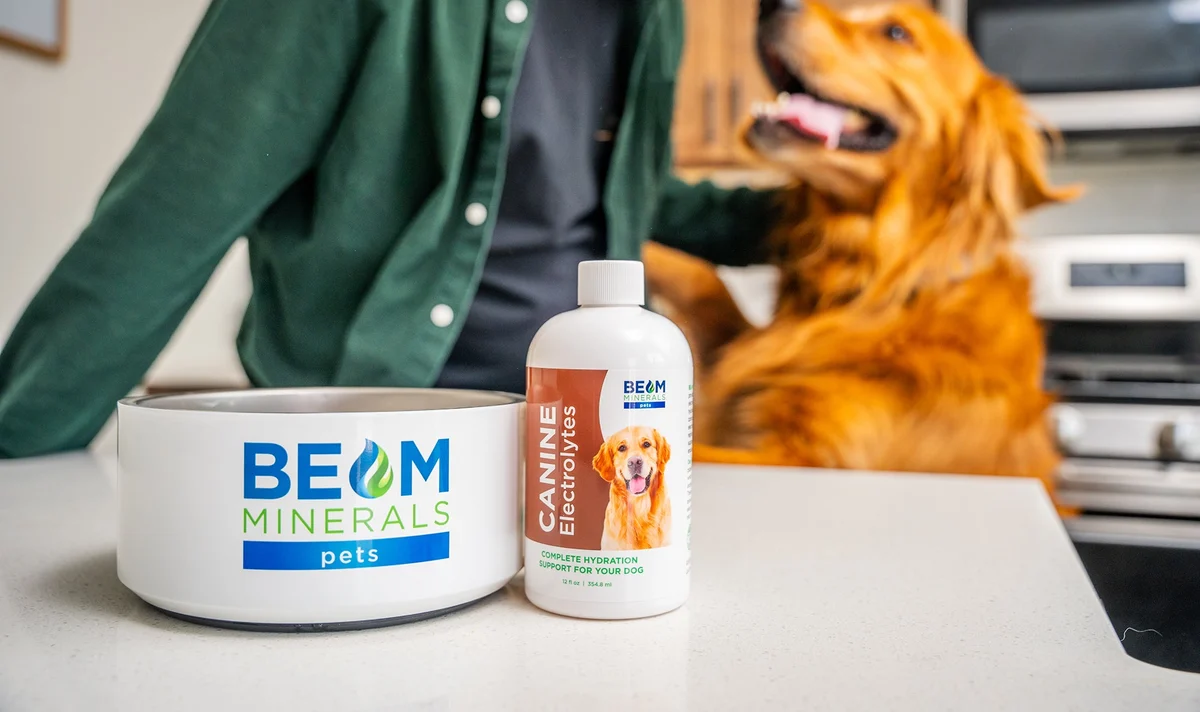
That’s why we make Complete Canine Minerals and Complete Feline Minerals . They’re the same high-quality mineral supplements we make for people, with quantities tailored to your dog or cat’s needs.
All you do is add our liquid minerals to your pet’s water. They have no taste, so you don’t have to worry if your pet’s a picky eater (or drinker). You can find charts in the links above telling you the quantity to add, based on your pet’s weight.
Minerals are an important part of joint health for both cats and dogs, especially as they age. They’re a great way to support your pet through a long, comfortable life.
Related products
Related blogs
Golden Years: Support Your Senior Pet with Minerals
As pet owners, we all know how hard it is to watch our furry loved ones get older. Seeing your pet slow down or go grey can be difficult, especially when their spirit stays young.
BEAM Minerals · 3 min read
Tummy Troubles? How Minerals Improve Your Pet's Digestion
A lot of pets get digestive issues as they age. In fact, digestive problems are the most common health issue in older dogs, and nearly 40% of older cats have reduced ability to digest protein and fat.
BEAM Minerals · 3 min read
How Minerals Give Your Pet a Shiny Coat & Healthy Skin
Dogs and cats benefit from minerals the same way we do. They need a variety of nutrients to maintain healthy fur and skin. That’s why we make mineral formulas specifically for pets .
BEAM Minerals · 3 min read